Why this, why now
More ground to watch than people to watch it
Seven organisations, one shape. Nobody in these stories is short of data. They are short of attention, and for thirty years the answer on offer was another map.
Better maps and better dashboards helped people see more. They never helped anyone act on more. A dashboard is a place to look; it does not look on your behalf.
That is the specific gap worth closing. Something that watches continuously, decides what is worth a person's attention today, and does the first pass of the work a person would otherwise have started from a blank page. Practitioners describing the shift in 2026 talk about moving from maps and analytics toward reasoning systems — decision support rather than another layer of pictures.
And this same community has good reason to be wary of anyone saying so, which is covered plainly at the bottom of this page.
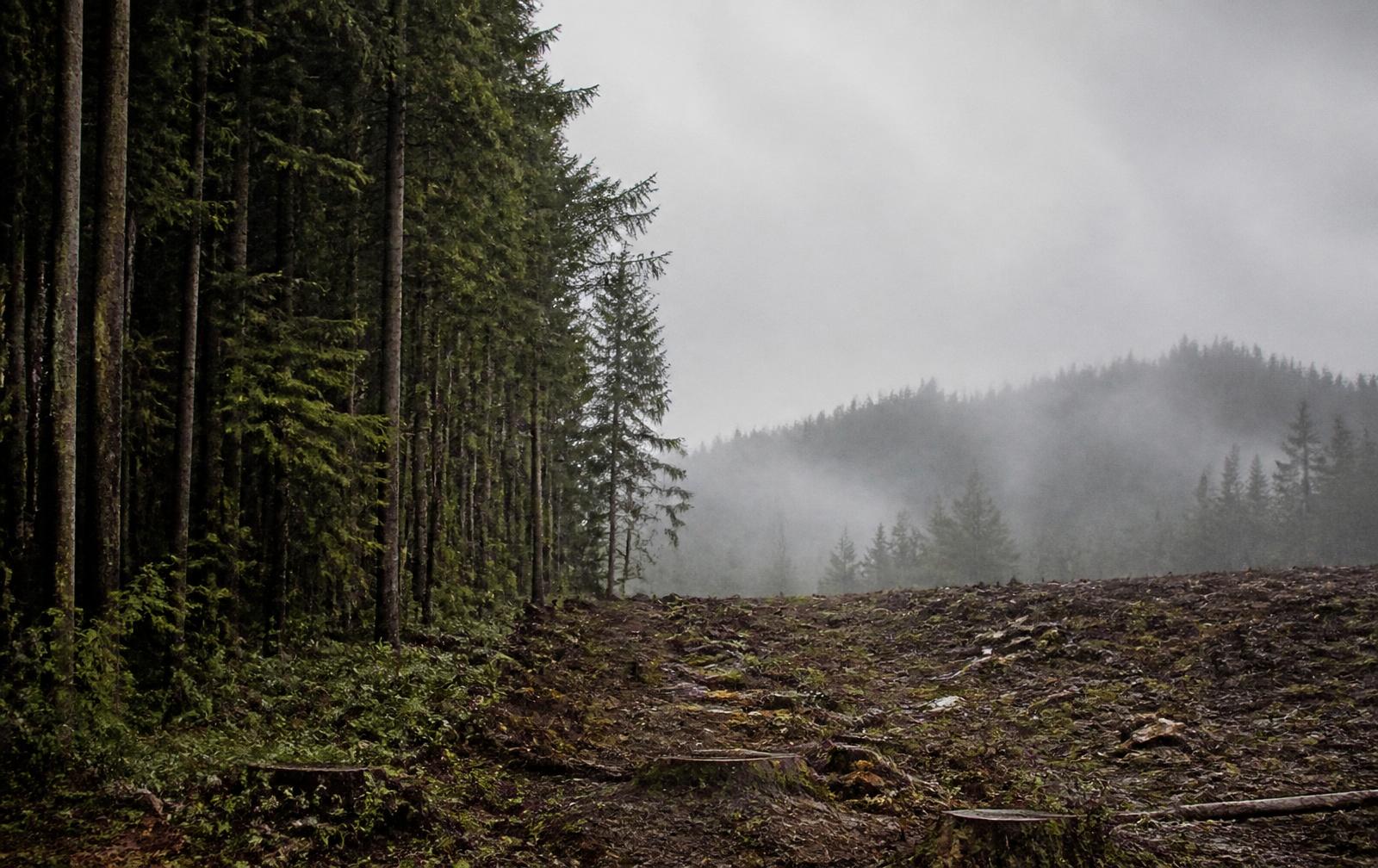
01 · Conservation
Four thousand parcels, three trucks
A land trust in the American Southeast holds easements on land it has promised to monitor once a year. The obligation is annual. Clearing is not.
Field staff drive a rotation and see what is in front of them that week. When something has happened on a parcel outside the rotation, it usually surfaces because a neighbour rings up, and by then the trees are down.
The imagery to notice it earlier has been arriving for years. Nobody has the hours to look at all of it.
02 · Government
A statutory duty the size of a state
A state water agency is responsible for permit compliance across every basin inside its borders. Its inspection queue is ordered mostly by when a file was opened.
That means a site where nothing has changed in six years gets visited on schedule, and a site where a discharge started last month waits its turn.
The staff know this. They have known it for a decade. The queue is not a failure of intelligence; it is a failure of attention supply.
03 · Insurance
Accurate on the day it was built
A property insurer refreshes its flood view each quarter. In 2025 several carriers publicly retreated from whole regions after loss years that their pricing had not anticipated at the speed it happened.
The models were not careless. They were current, and then the ground moved — a burn scar upstream, a levee downgraded, a subdivision built where water used to go.
Reviewing two million locations continuously has always been the obvious answer and never the affordable one.
04 · Infrastructure
Line miles versus crew hours
A utility patrols thousands of miles of distribution line. Vegetation grows on its own schedule, and the consequence of missing a span in the wrong month has been established in court more than once.
Aerial and satellite coverage of the corridor exists. So does a crew calendar that was set before the coverage did.
The gap between what is observed and what is acted on is where the risk lives.
05 · Disaster response
The first two hours are assembly
A regional coordinator is woken at eleven at night. Before any judgement call is made, someone has to work out which facilities are inside the affected area, which roads are cut, which crews are within reach, and who gets called first.
None of that is hard. All of it is slow, and it is slow at the exact moment when slowness is expensive.
Teams sized for one emergency are regularly asked to run two.
06 · ESG reporting
The question arrives eight months later
A ratings provider publishes a water-stress score for a portfolio. Well after publication, a client's counsel asks how one site's score was reached.
The answer exists across a spreadsheet, an email thread, and the recollection of an analyst who has since moved on.
As disclosure regimes tightened through 2024 and 2025, that reconstruction stopped being an inconvenience and started being a liability.
07 · Agriculture and food
The land knew first
A sourcing team hears that a growing region is having a difficult season. The formulation team finds out when a specification fails. Procurement finds out when the price moves.
The information existed at the parcel weeks earlier and took a month to reach anyone who could act on it.
Meanwhile the same company now has to prove where an ingredient came from, with dates, at a resolution nobody was recording five years ago.
And the reason to be sceptical
Analysts tracking agent projects expect more than four in ten to be cancelled before the end of 2027, on cost, unclear value, and governance that was never settled in advance. A separate study of enterprise pilots found the large majority produced no measurable return. There is also a well-documented amount of relabelling — older tools renamed rather than rebuilt.
We think that record is the opening rather than the obstacle, and our answer to “why would this one hold” is structural. A framework you own outlasts a subscription you cannot extend.
Sources: Gartner press release, 25 June 2025. MIT Media Lab / Project NANDA, “The GenAI Divide: State of AI in Business”, July 2025. Figures move between publications and should be re-checked against the current release. verify before publish
How the framework model works →